NSPanel Pro Cards
Home Assistant cards for wall panels that cannot afford to lag.
An open source card pack for Home Assistant, built for one specific piece of hardware: the Sonoff NSPanel Pro. It covers both sizes — the 3.95" 480×480 Pro 86 and the 4.7" 750×1334 Pro 120 — with a single set of cards that only differ in how you lay them out.
The constraint is the whole project. Behind the glass sits a quad-core Cortex-A35 Rockchip with 2 GB of RAM and a Mali-G31, running Android 8.1 — 2018-class silicon. The usual Home Assistant card packs are designed for phones, so on a wall panel their sliders lag, their hitboxes are too small and their text is too tiny to read from across the room. Every card here is shaped around that.
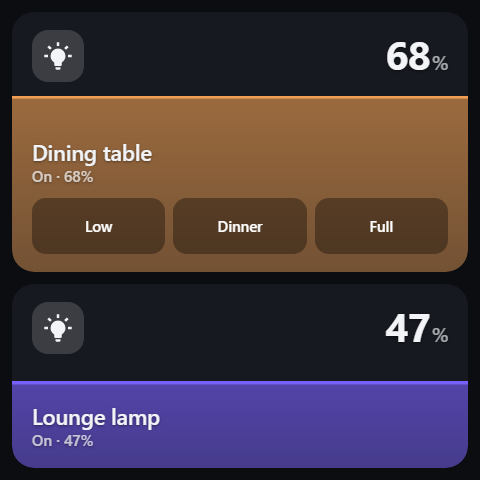
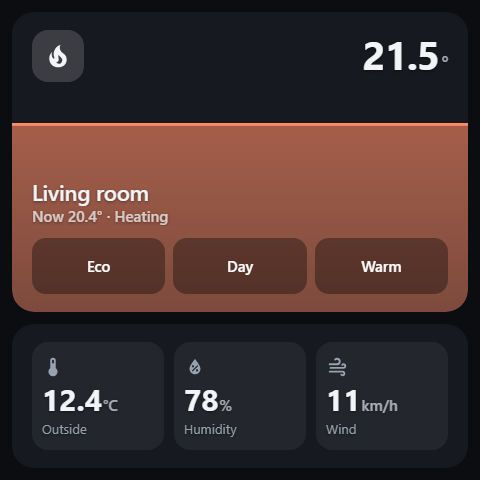
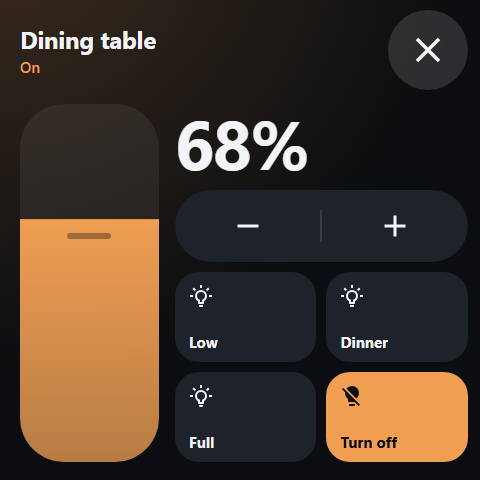
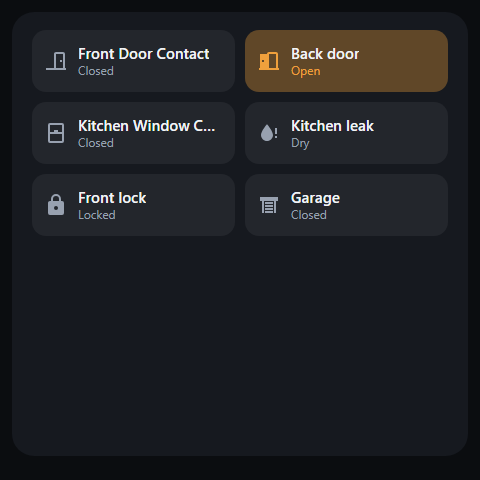
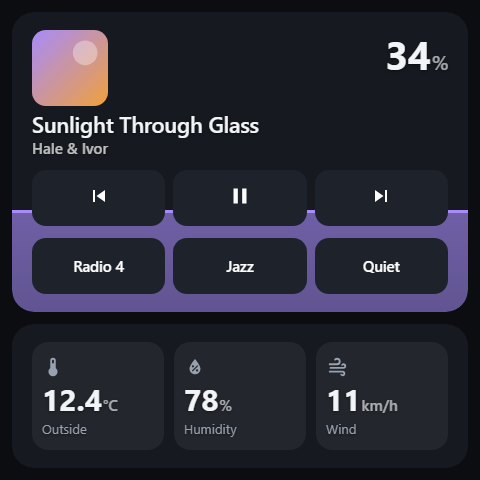
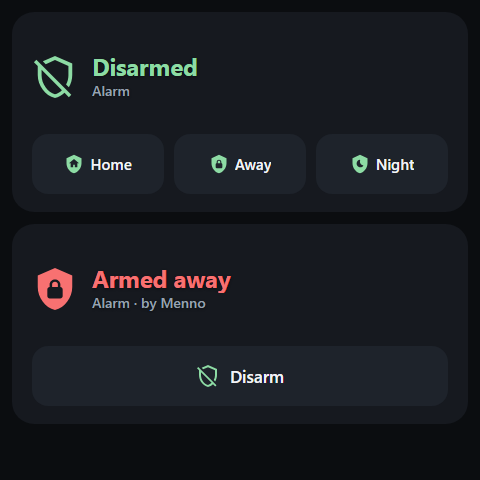
Fifteen cards ship in the pack: lights, covers, climate, media, scenes and scripts, cameras, swipeable pages, switches, alarm arming, sensors, door and window status, weather, a clock, and a diagnostics probe. Controls use a single gesture language — drag to set a value, tap to act, long-press for a full-screen surface with large type and preset buttons you can hit without looking.
Making it feel instant took a deliberate approach. No service calls go out mid-drag; the fill tracks your finger on the compositor with translate3d and one call fires on release. Incoming state is ignored briefly after a change so a slow round-trip cannot yank the slider backwards. Each card diffs the global state object down to the single entity it cares about and returns immediately otherwise. Only transform and opacity are animated — no backdrop filters, no animated shadows. The DOM is built once. There is no framework and no dependency; the whole bundle is a single file against a Chromium 108 baseline.
The cards speak the language of whoever is looking at them — English, Dutch or German — covering states, buttons, the long-press sheet, the keypad, weather conditions and date formatting. Installation runs through HACS as a custom repository.
Alongside the cards I built a native Flutter app for the panel, which reads the swipe card as its own list of pages, and wrote the tutorial that takes you from an empty Home Assistant to a working panel. Both projects are MIT licensed.
Something like this, for you?
Most of these started as a conversation about a process that had stopped scaling.
Start a conversation